Once a pariah, France’s Rassemblement National (National Rally) is now the country’s most popular party and looks on track to win the presidency in 2027 — or perhaps sooner.
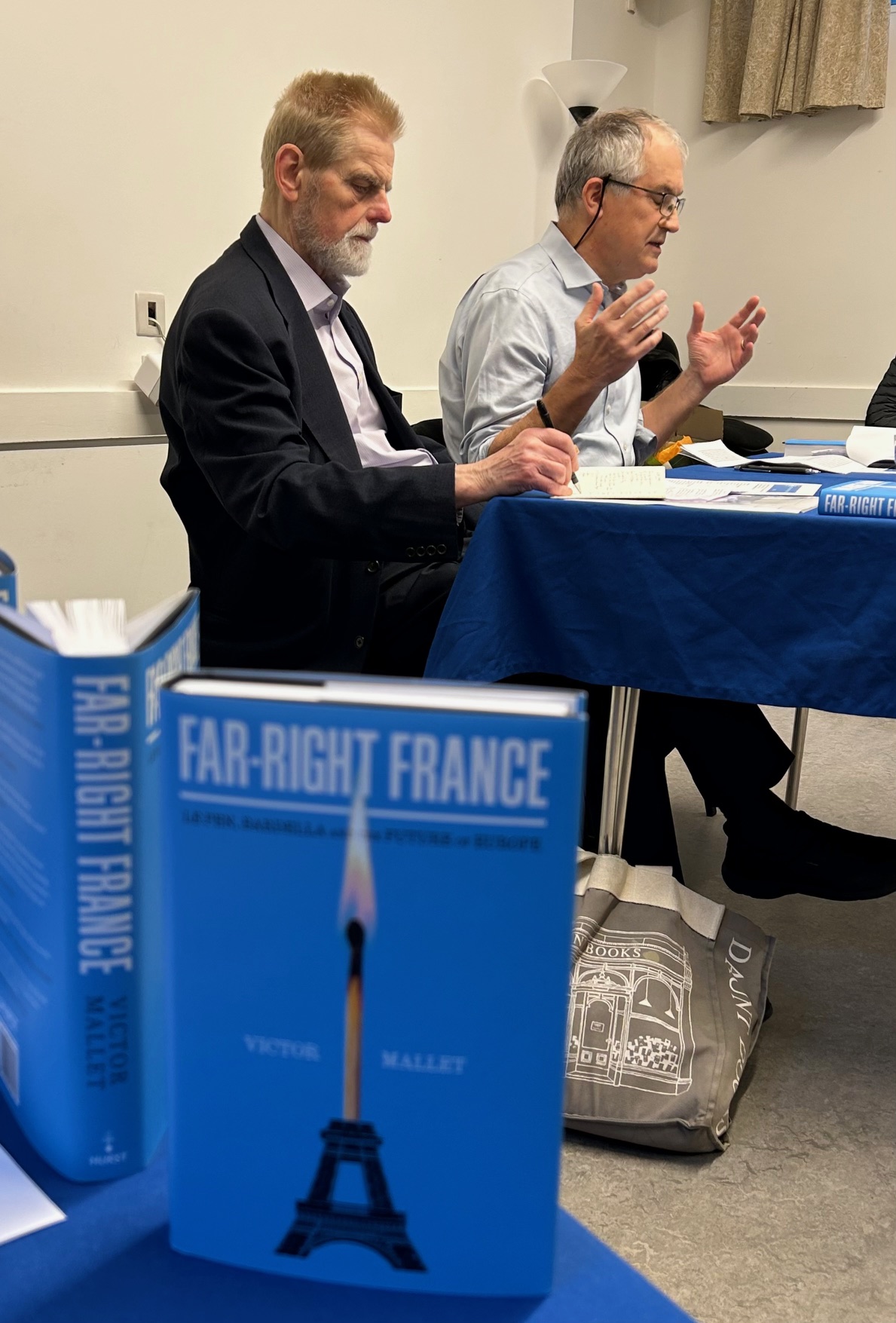
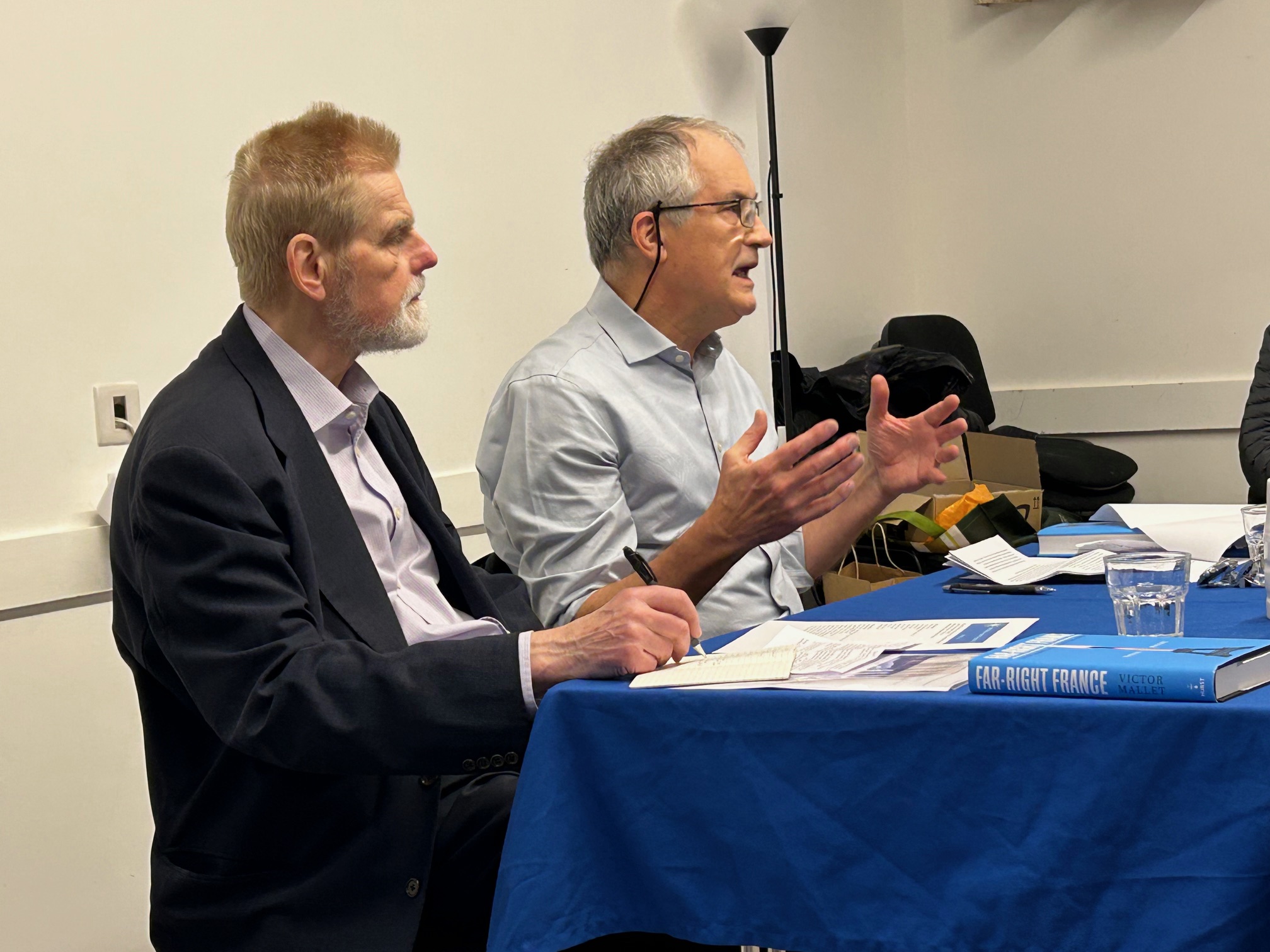
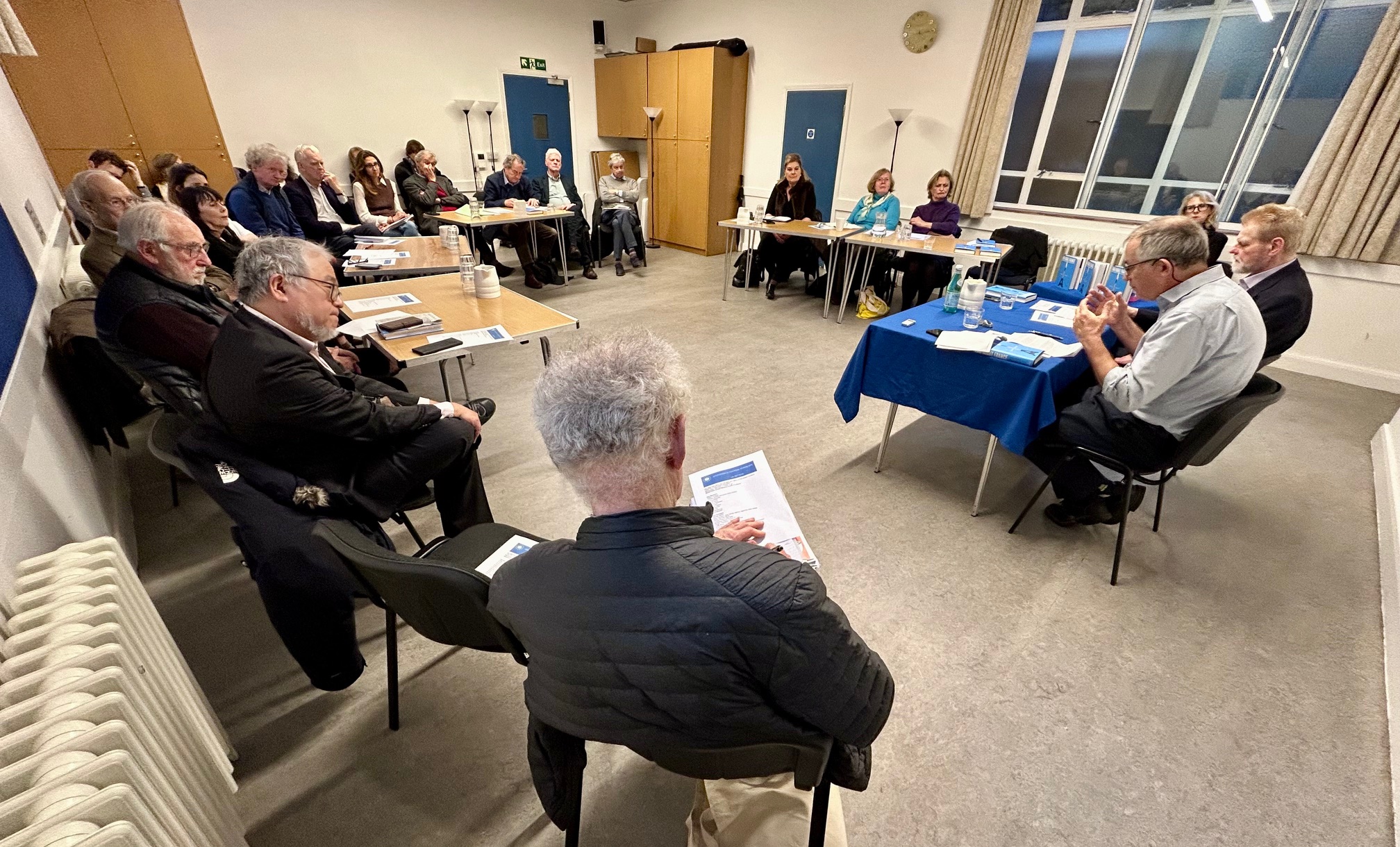
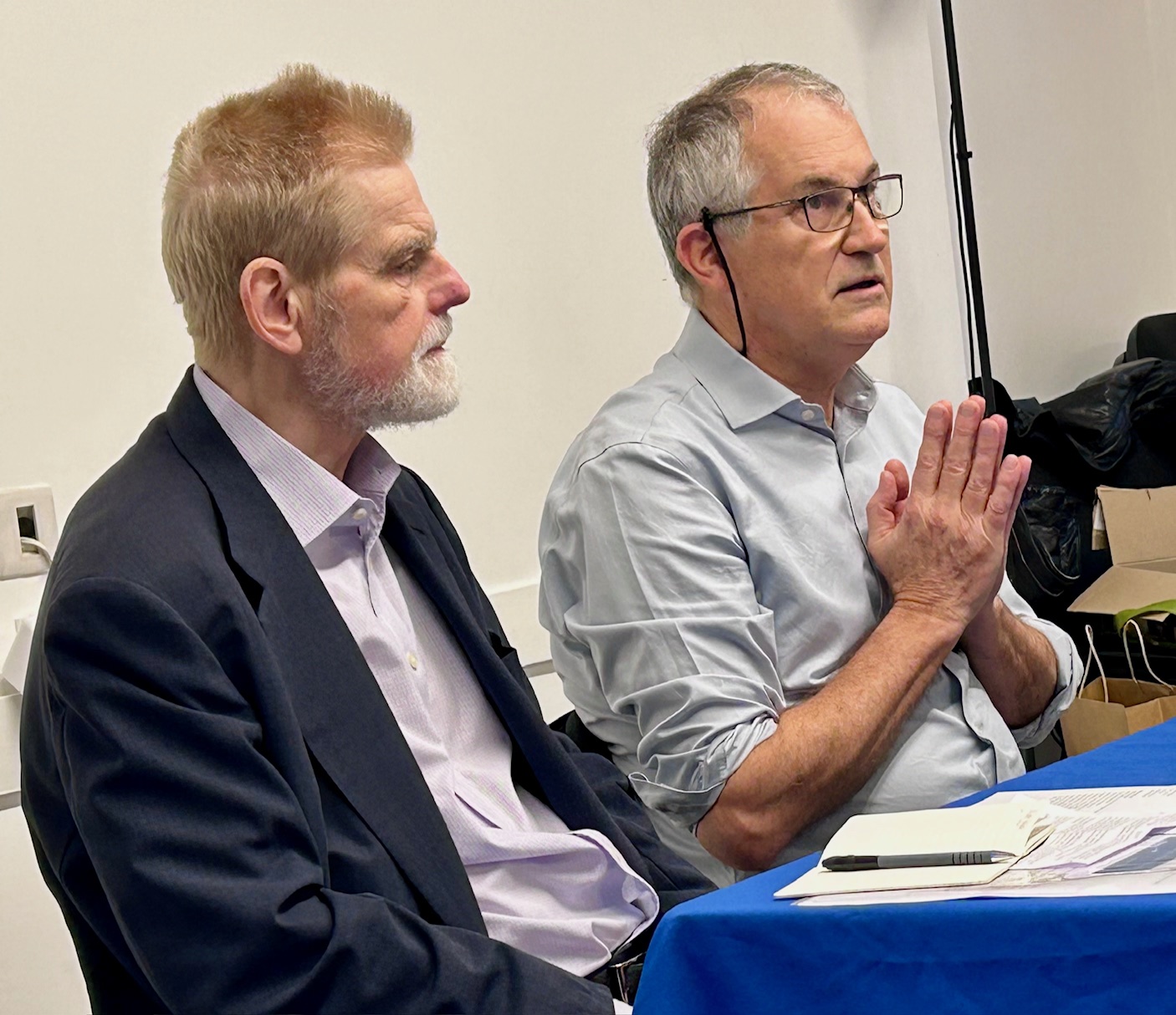
To examine this and the wider implications for other countries in Europe, the AEJ UK hosted author and journalist Victor Mallet at a meeting on 11 February at Westminster Quaker Meeting House.
Mallet has just published Far-right France: Le Pen, Bardella and the Future of Europe (Hurst, 2026) and is senior world editor of the Financial Times and a former FT Paris bureau chief.
We have this report from AEJ member Quentin Peel, associate fellow at Chatham House and former foreign editor of the Financial Times.

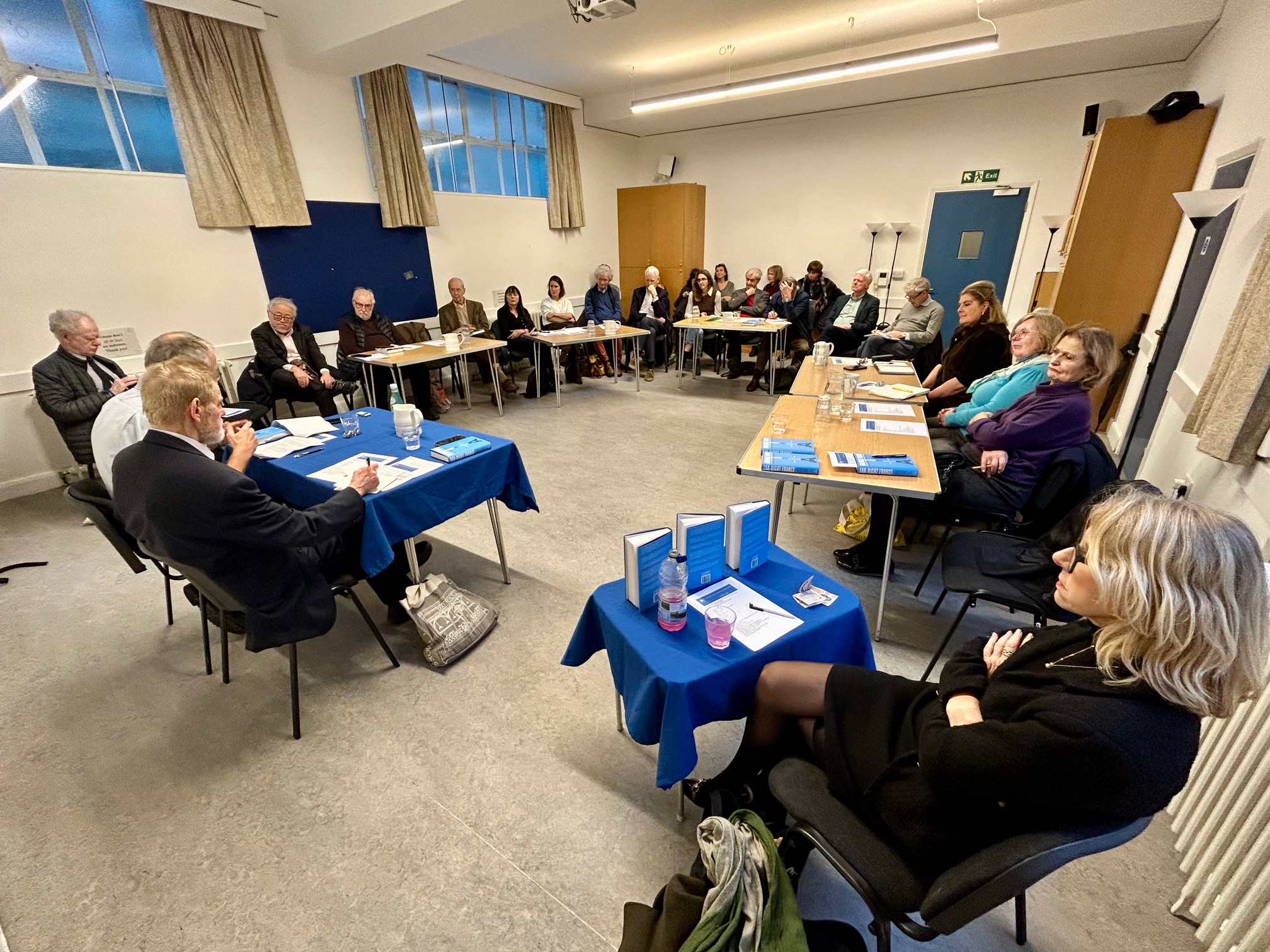
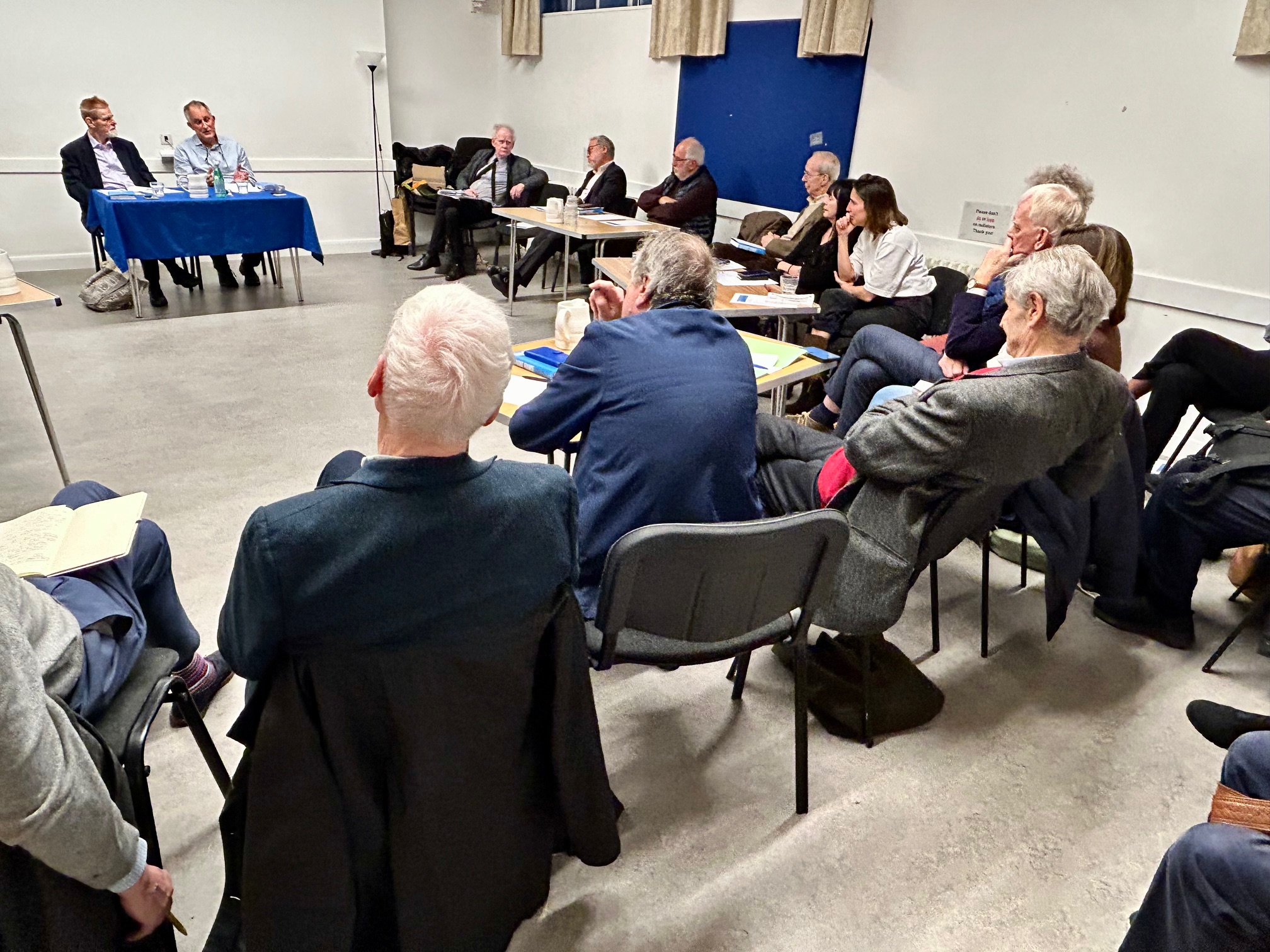
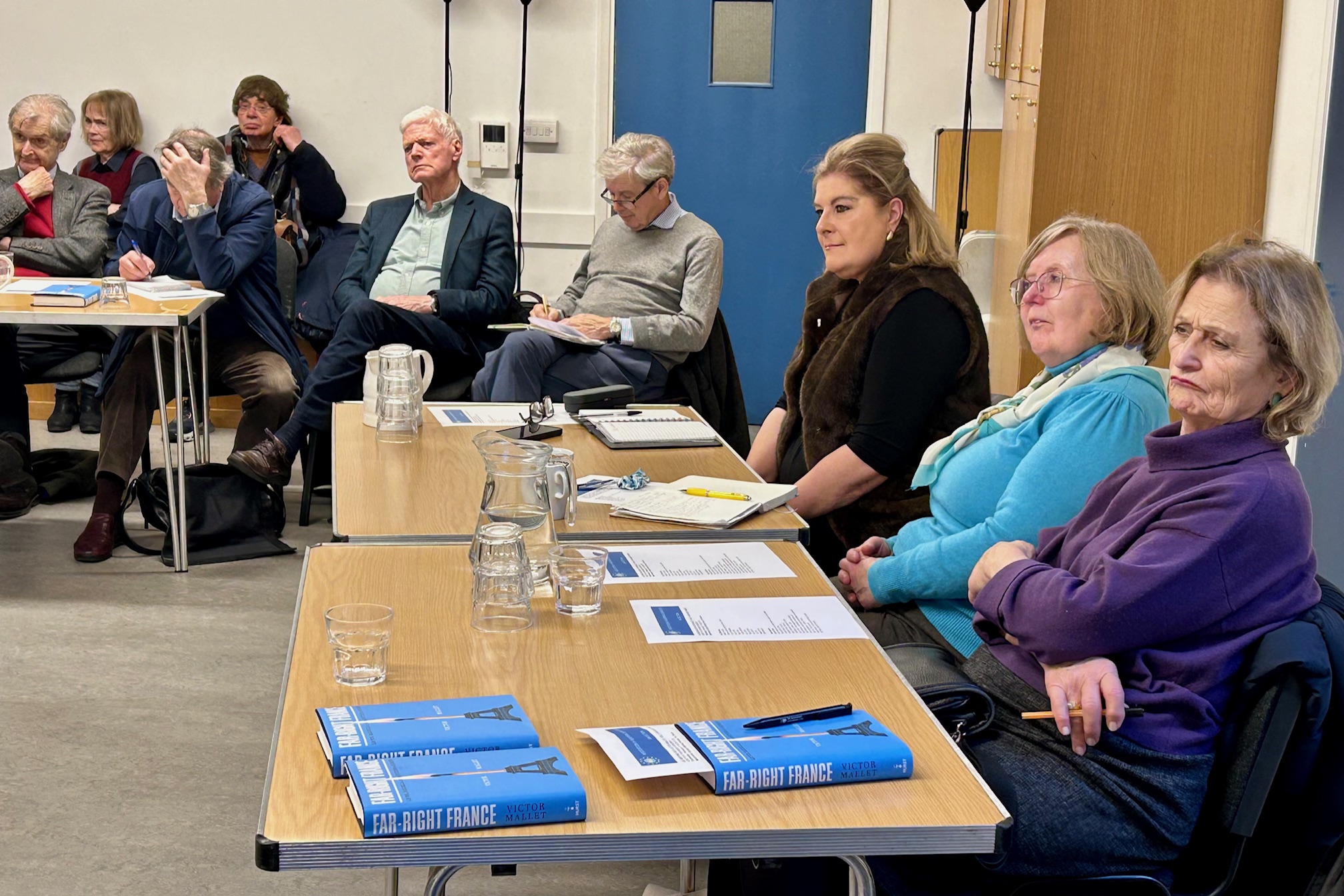
Our first AEJ meeting in the welcoming surroundings of the Quaker Meeting House on St Martin’s Lane heard Victor Mallet of the Financial Times present his new book on Far-Right France. It attracted an enthusiastic audience and a lively debate with a stream of good questions.
AEJ chair William Horsley introduced the speaker with a challenge: his book seemed to suggest what used to be thought unthinkable. If Marine Le Pen’s far-right National Rally (Rassemblement National, or RN) were to win the next presidential elections in France, could it unite far-right parties across Europe, and transform the politics of the European
Union? Did he think that a serious possibility?
Mallet’s immediate response was “Yes.” He quoted Jordan Bardella, the 30-year-old telegenic president of the RN and successor to Le Pen, and now the most popular politician in France. Back in 2024 he said: “There are people on the beach who can’t see the wave coming.”
At the time, Bardella was attending the founding meeting in Budapest of the Patriots for Europe, the largest far-right group in the European Parliament. The group combines the French RN and Fidesz, the party of Hungarian premier Viktor Orbán, with allies from Austria, Denmark, the Netherlands, Spain and Portugal, among others. Bardella was elected president.
Orban told the meeting: “The Trump tornado has changed the world in just a few weeks…Yesterday we were heretics, today we’re mainstream.”
Marine Le Pen, Bardella’s mentor, said much the same: “Europe is at a tipping point, and the EU seems to be stupefied.”
They have a point. The rise of the far right across Europe means it is no longer just a disruptive force, said Mallet. Where Orbán was an outlier 15 years ago, there are now significant far-right or nationalist parties in many if not most EU member states, in power in Italy and Slovakia, and in coalition governments in Belgium, Finland, Croatia, and Czechia. In Austria and Poland the far right is the main party of opposition. The RN has an effective veto power on President Macron’s government plans in France, and the AfD in Germany is running second in the polls to the
centre-right Christian Democrats, well ahead of the venerable Social Democrats.
Yet it is a complicated picture. The far right has suffered recent setbacks. Orbán himself is trailing in the polls before Hungary’s election in April, and could be defeated by his rival Peter Magyar. Geert Wilders’ PVV is out of the government in the Netherlands. Fico faces a growing backlash in Slovakia. There are big popular protests against the
nationalist government in Serbia.
The far right is also profoundly disunited. The far-right nationalist parties represented in the European Parliament are split into three fiercely rival groups, divided by both policy and personalities. Giorgia Meloni, the influential Italian prime minister, keen to prove her pragmatic credentials, is a notable absentee from the Patriots’ group, particularly because of
the pro-Russian sympathies of Orbán and his allies. She has teamed up instead with Poland’s PIS – fiercely anti-Russian – in the European Conservatives and Reformists group – where the British Conservatives used to sit before Brexit. The AfD sits in the smallest group, Europe of Sovereign Nations, with a handful of central European allies.
In France, Marine Le Pen has sought to pursue a similar strategy to Meloni in Italy: she is seeking to normalise and legitimise the RN as a law-abiding party – far removed from the neo-Nazi sympathies once espoused by her father Jean-Marie Le Pen when he founded the Front National, its predecessor, in 1972. That is also why Le Pen “does not
want to be associated with” the Alternative für Deutschland (AfD), where prominent members are accused of neo-Nazi sympathies. Jordan Bardella cancelled a trip to the Conservative Political Action Conference in the US last year, because Steve Bannon, former adviser to Donald Trump, was photographed giving a Nazi salute.
The one theme that unites virtually all the far-right groups is immigration, said Mallet. They are divided on environmental policies, and on social liberalism, as well as on their attitudes towards Putin’s Russia – and
Donald Trump. The US president divides the European far right, not least because he is seen as an electoral liability: profoundly unpopular with voters across Europe. He mistrusts the RN, but favours the AfD, another cause of division between the French and German far right.
Mallet says the divisions undermine their effectiveness in the EU process: “They agree enough to do damage to the EU system, and its decision-making, but not enough to run the show”. But what the experience of Brexit seems to have taught them – and particularly Le Pen and Bardella – is that leaving the EU in a nationalist huff is not a sensible policy. They hope to change it from within. Bardella says: “These days there is every reason to take power from within [the EU] … what I mean is that when you’re winning the match, you don’t suddenly leave the pitch.”
It is still uncertain if Le Pen or Bardella will be the RN candidate for president in the 2027 presidential election. Le Pen has appealed against the Paris court judgment that she cannot run for office for five years, because of using EU funds for a national election campaign. The appeal is yet to be decided. Either way, the RN could well be in pole position
against a motley assortment of centre-right, centre-left and far-left opponents.
The two-stage French presidential election means that “in the first round you vote for the one you want, and in the second you vote against the one you hate,” said Mallet. Hitherto a coalition of centre-right and centre-left has always managed to block the far-right – both Jean-Marie Le Pen and his daughter Marine – in the second round. But that “republican front” of the centre is now in disarray. It is possible that Jean-Luc Mélenchon, leader of the far-left La France Insoumise, might make it to the second round instead of a centrist figure. A contest between far-left and far-right makes it even more likely that the RN candidate would win.
Mallet argued that one important advantage for Bardella, as future presidential candidate, is precisely because he has been blocked from becoming prime minister by all the rival parties. Other former centrist prime ministers favoured by Macron, such as Edouard Philippe or Gabriel Attal, have become unpopular because of their time in office. By blocking Bardella, the rival parties were actually helping him. “The idea of a cordon sanitaire only works until the far right is so popular that it cannot be managed,” Mallet said.
But what sort of government would the RN provide for France: radical and revolutionary, or more pragmatic like Meloni in Italy? If the RN won both presidential and parliamentary elections, Mallet thinks Bardella might make Le Pen his prime minister. There would be less need for moderation than in any multi-party coalition. He quoted Pierre-Yves
Bocquet, former adviser to President Francois Hollande, who predicts a “xenophobic revolution,” in which the RN would use the instruments of French democracy to undermine the system as Orbán has done in Hungary, controlling the media via sympathetic business figures, and appointing far-right judges in the courts.
Bardella said that in the first 100 days, an RN government would hold a referendum on restricting immigration, pass legislation to deny the automatic right of citizenship to anyone born in France, allow social security payments only to French citizens, and slash government red tape on businesses. It would not seek to leave the EU, but its actions
might very well conflict with EU law.
That would create the same sort of confrontation with Brussels currently presented by Orban’s Hungary. But Hungary is a small country. As a founder member state, and the second largest economy after Germany, France matters much more. Pursuing a populist-nationalist agenda would challenge the cohesion of the main institutions, and precipitate a
fundamental crisis at the heart of the EU.
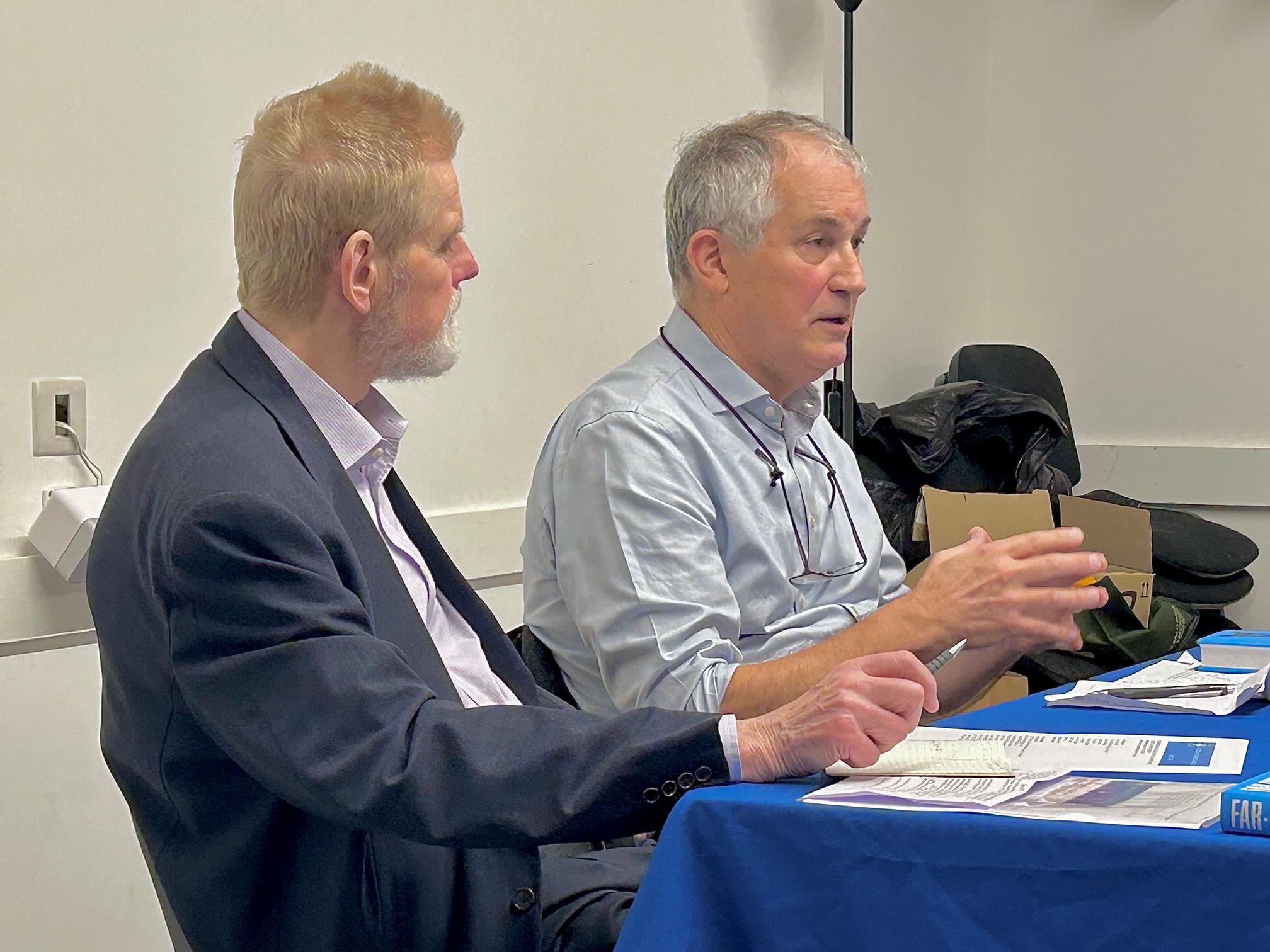
Victor Mallet at the AEJ UK 11 February 2025


Photos by Doros Partasides